A good layer of mulch is one of the simplest things you can do for a garden. Put down over winter, it keeps weeds in check, holds on to moisture, and leaves a lot less to do next season.
What it is
A layer of organic material spread over the soil, around plants and across beds. Compost, leaf mould, bark or woodchip, depending on what the bed needs.
Why winter
Beds are cleared, the soil is damp and most plants are resting. It is the easiest time to get it on cleanly, and it is ready for spring growth.
Where it works
Borders and shrub beds, veg plots, the base of trees, hedges and orchard trees.
How thick
Usually 5 to 7cm, kept clear of stems and trunks so nothing rots.
Best for
Larger beds and borders where weeding is a regular chore, and veg plots you want to keep productive with less effort.
On its own or with care
Mulching can be a one-off winter job, or part of regular garden care.
I look at your beds and soil, and what you want from them.
02
Choose the mulch
We pick the right material for each area.
03
Prepare the beds
I clear and weed so the mulch sits on clean soil.
04
Spread it
I lay it evenly at the right depth, clear of stems and trunks.
Making your own compost?
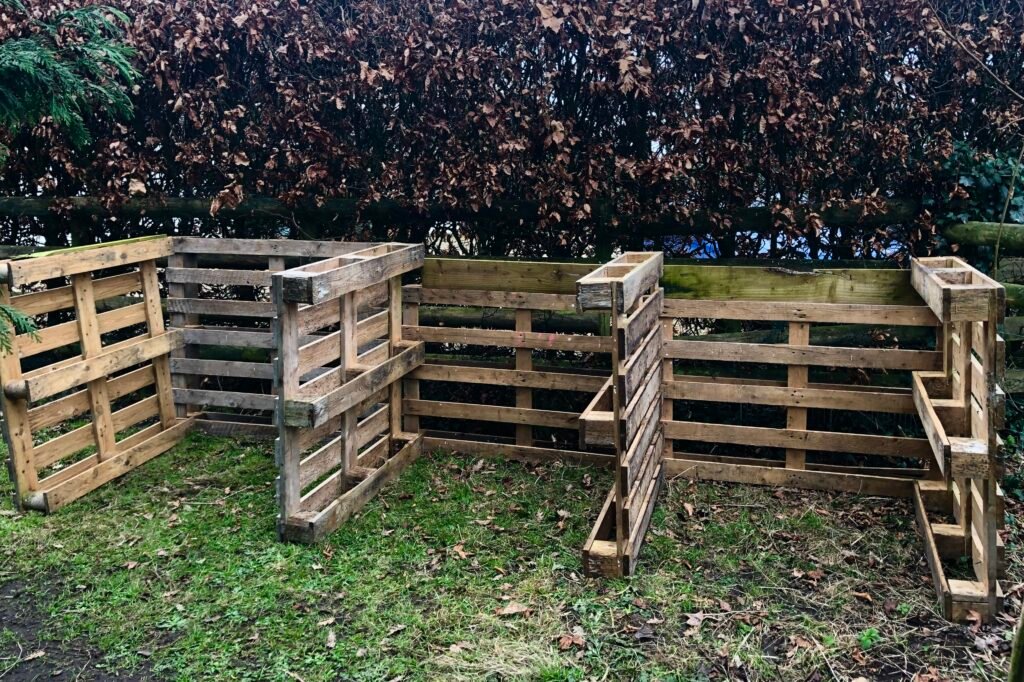
Good mulch starts with good compost. If you would like to make your own at home, I can build you a compost bin system and show you how to get the best out of it.
It depends on the bed. Compost or leaf mould for borders and veg, bark or woodchip for paths, trees and shrubs. We will talk it through at the site visit.